Project Background
When I joined Signify (formerly Philips Lighting), I was tasked with redesigning the GrowWise & GrowDigital applications, part of the Interact Horticulture LED Solution.
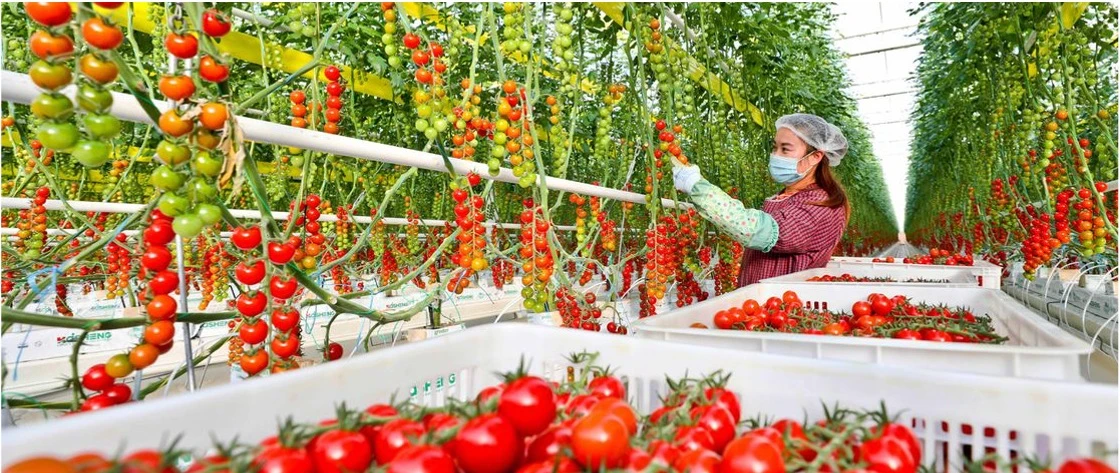
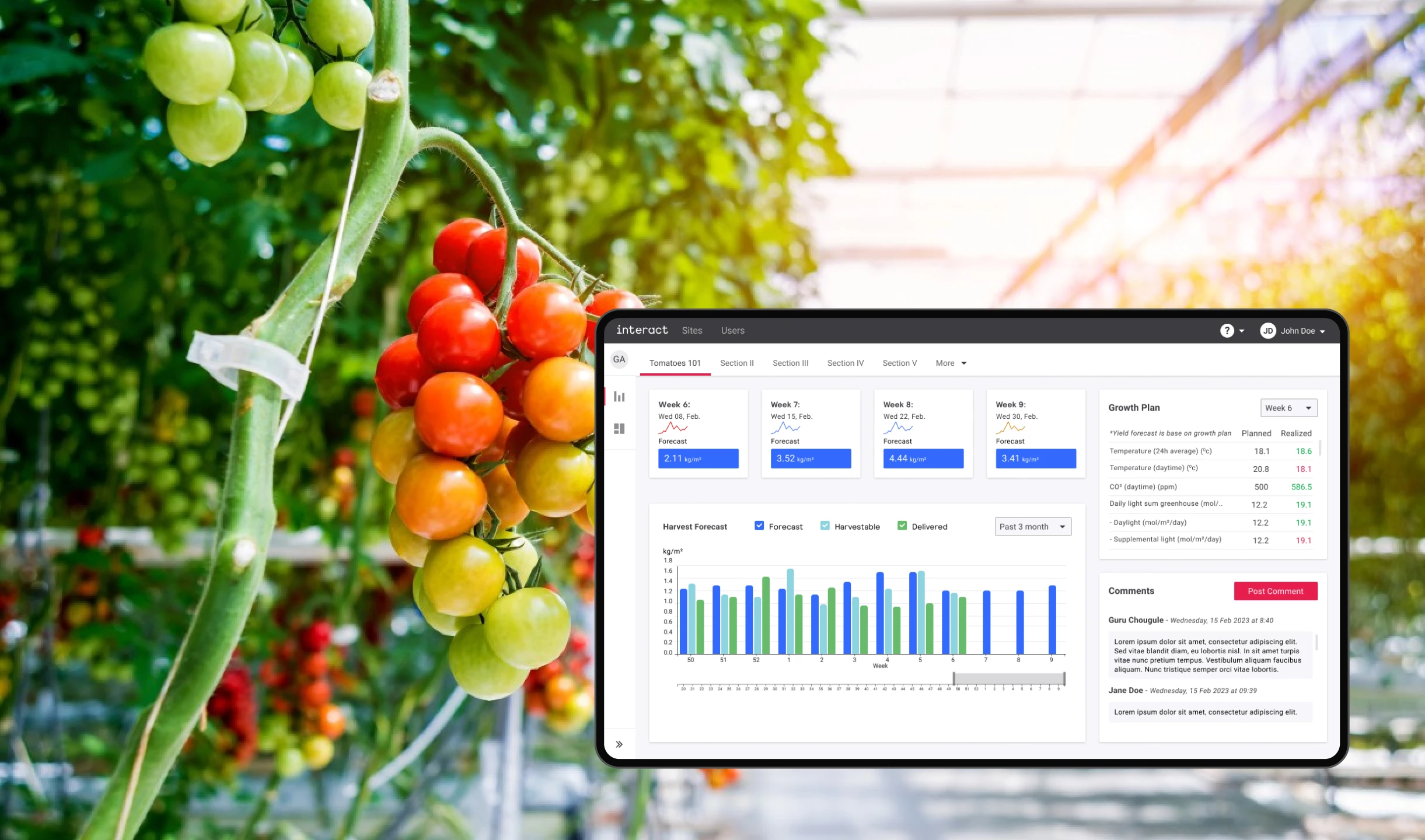
GrowWise is a light control system that helps automate LED lights and improve results for any situation, while GrowDigital is a harvest forecast application for tomato production in greenhouse farming. The project aimed not only to improve the efficiency of LED grow lights in industrial greenhouses but also to enhance the overall user experience for partners of Philips LED Solutions across Europe, North America, and Asia.
The existing pilot applications, though functional, presented significant challenges. The design was outdated, the user flow was complex, and the applications operated independently with separate URLs and logins despite being used in the same greenhouses.
The Objective
The primary objective was to redesign the GrowWise light control system and the GrowDigital harvest forecasting application to:
- Modernize the user interface and improve usability.
- Create a unified experience by integrating both applications into a single platform.
- Enhance the onboarding and operational efficiency of greenhouse technicians and administrators.
- Maintain consistency with the global Interact Design System used by Signify.
Initial challenge: I joined the project post-pilot release, giving me access to real user feedback. However, as most partners were based in the Netherlands, much of the documentation and many meetings were in Dutch—a language I did not speak.
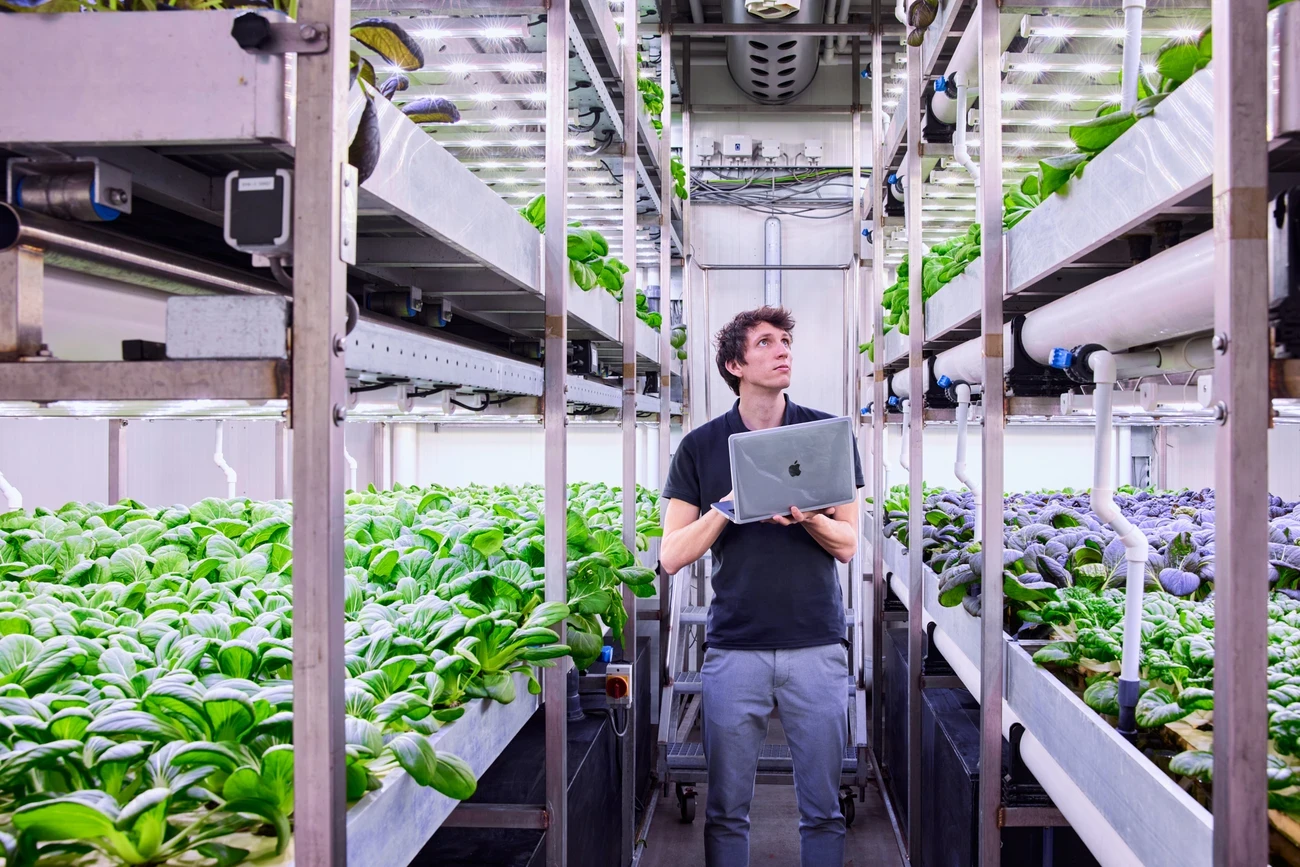
Sustainable Farming with LEDs
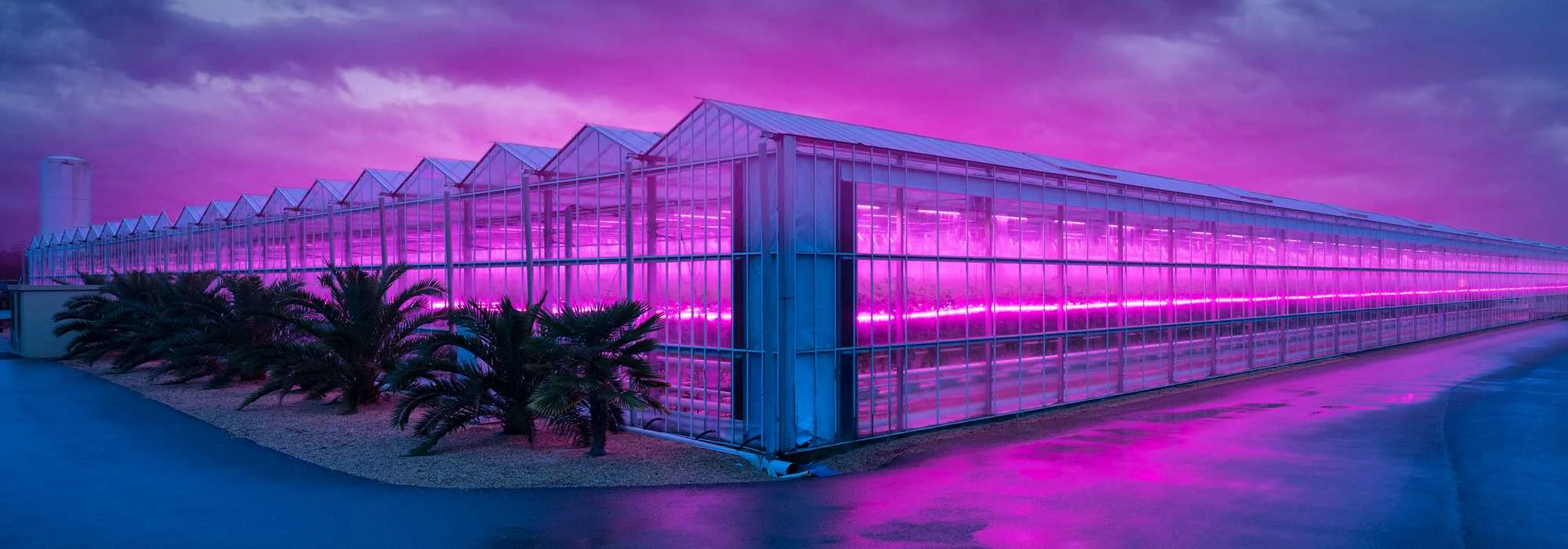
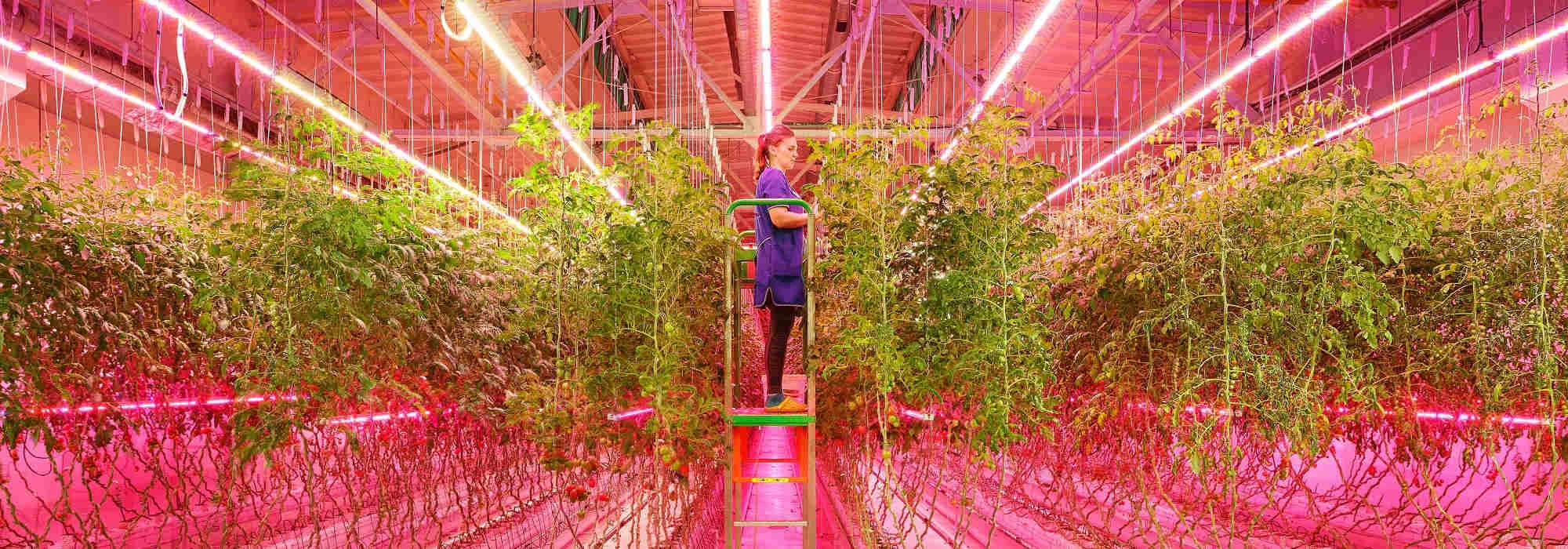
With the population set to hit 10 billion by 2050, LED-lit greenhouses are key to growing enough food. Sustainable and efficient, LEDs are helping farmers cut energy use and CO2 emissions.
Research & Discovery
My research kicked off with a mix of qualitative and quantitative methods. I conducted interviews with English-speaking stakeholders and worked alongside my Dutch-speaking colleague to engage with local partners. We gathered insights from six distinct user personas, analyzed support tickets, and distributed surveys that garnered feedback from more than 10 users.
One standout insight came from a greenhouse operator: “I need to adjust light settings quickly, but the current system makes me feel like I’m solving a Rubik’s cube.” This highlighted a critical usability issue. Users needed a more intuitive interface that reduced complexity and saved valuable time.
The data revealed contrasting needs. Greenhouse owners prioritized data analytics and harvest forecasts, while technicians cared more about ease of installation and maintenance. This duality became the foundation for the redesign strategy.
- Interviews: Six participants across stakeholders and partners.
- Surveys: Feedback from greenhouse partners using the pilot applications.
- Data analysis: Support tickets and feedback logs exposed recurring issues and feature requests.

Key Findings
Fragmented Experience
Separate URLs and logins for GrowWise and GrowDigital disrupted workflows in greenhouses using both applications.
Inefficient User Flows
Simple tasks required too many steps, including key combinations to access administrative features.
Design Consistency
The pilot application did not align with Signify’s Interact Design System, causing confusion and inefficiency.
Mobile Needs
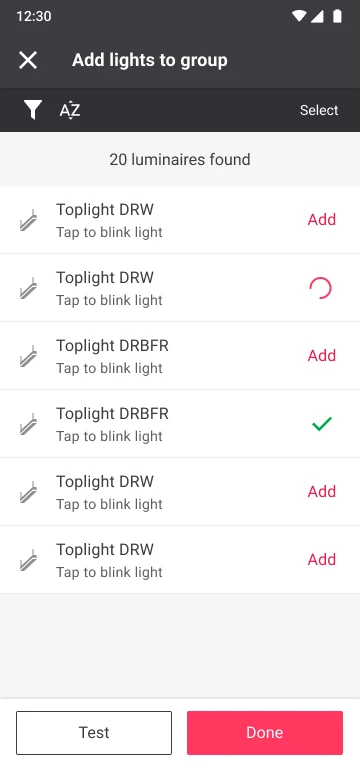
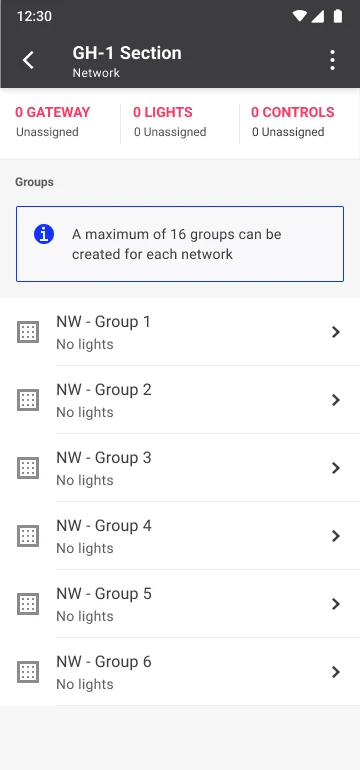
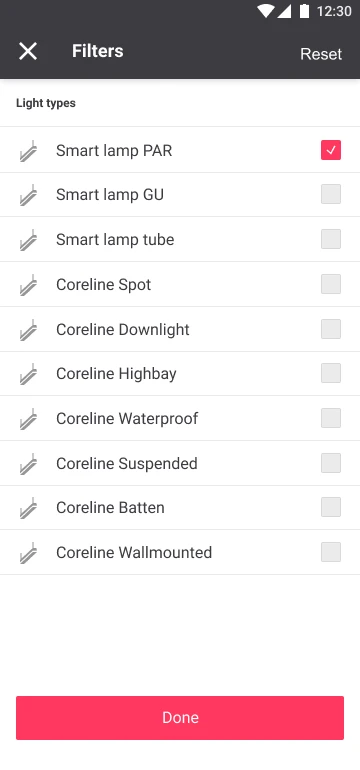
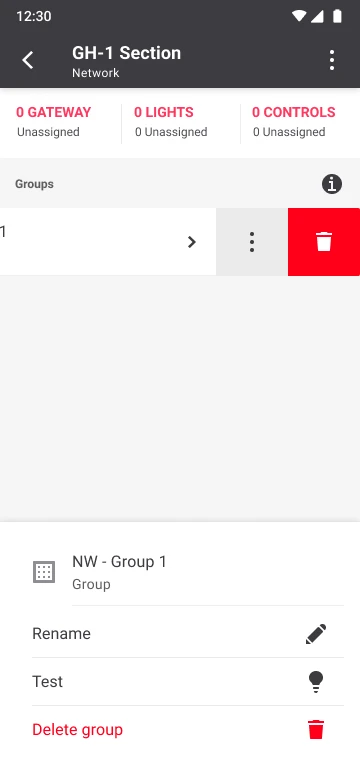
Field technicians needed a more intuitive mobile interface for site commissioning and maintenance.
Redefining the User Experience
I developed personas and journey maps to illustrate the current and ideal experiences. This helped turn the research into a clear picture of who we were designing for and what each person needed to accomplish.
Although the three personas worked in the same greenhouse ecosystem, their priorities were very different. Operators needed immediate access to lighting controls and crop information, technicians needed a simpler commissioning process in the field, and owners needed reliable analytics for planning and decision-making.

Needed quick access to light controls and harvest data.
Required an intuitive mobile app for commissioning and maintenance.
Sought advanced analytics and reporting features.
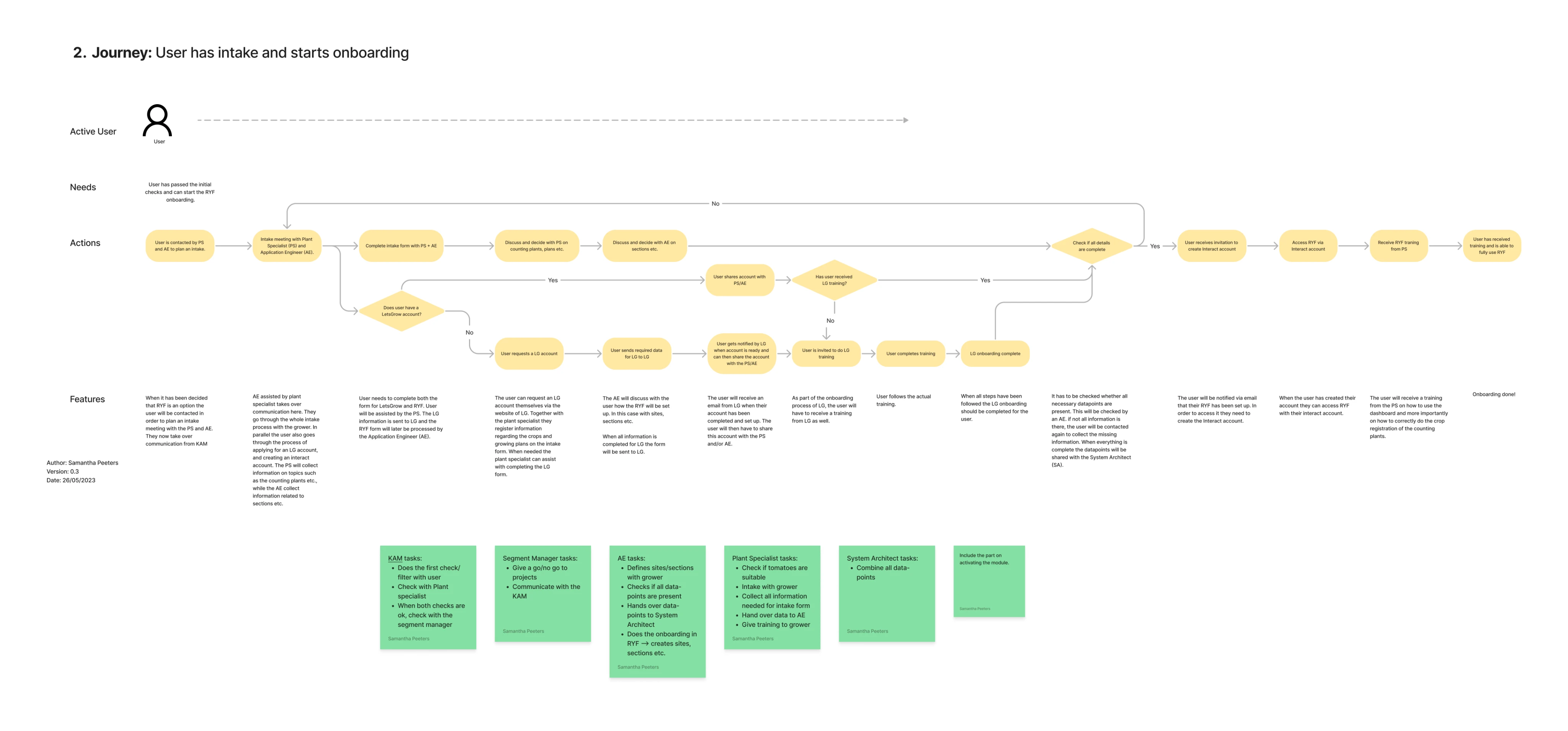
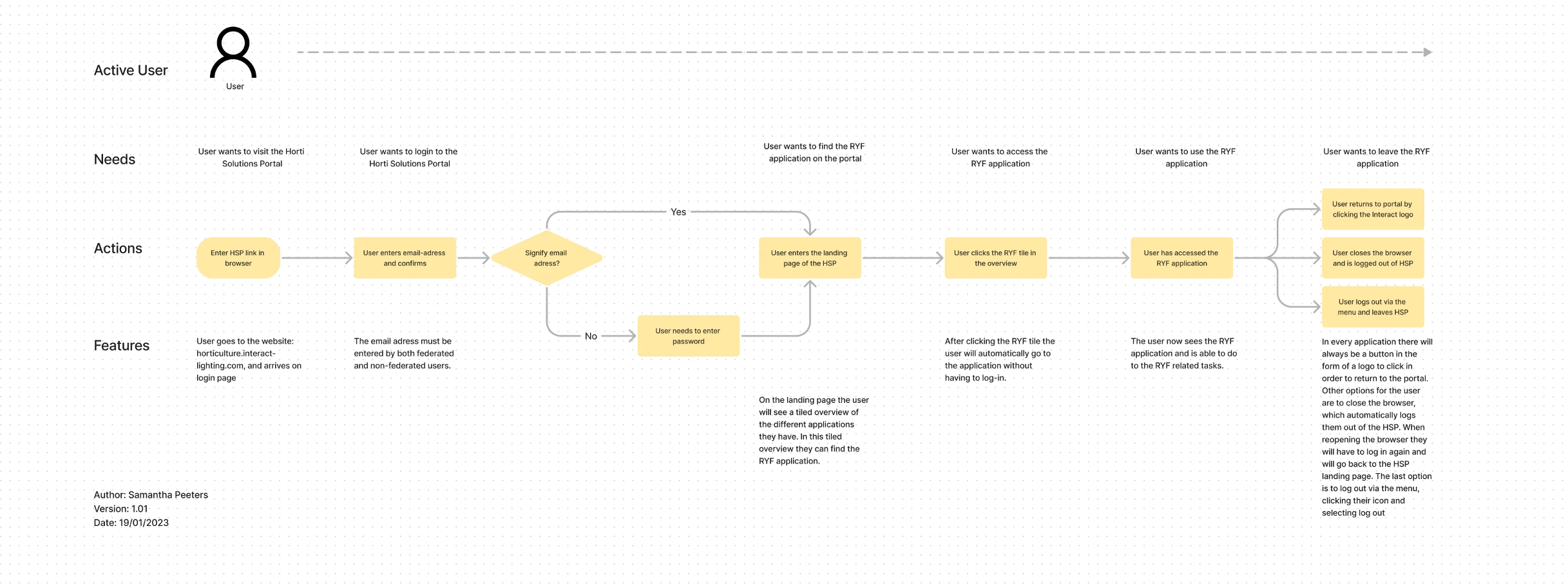
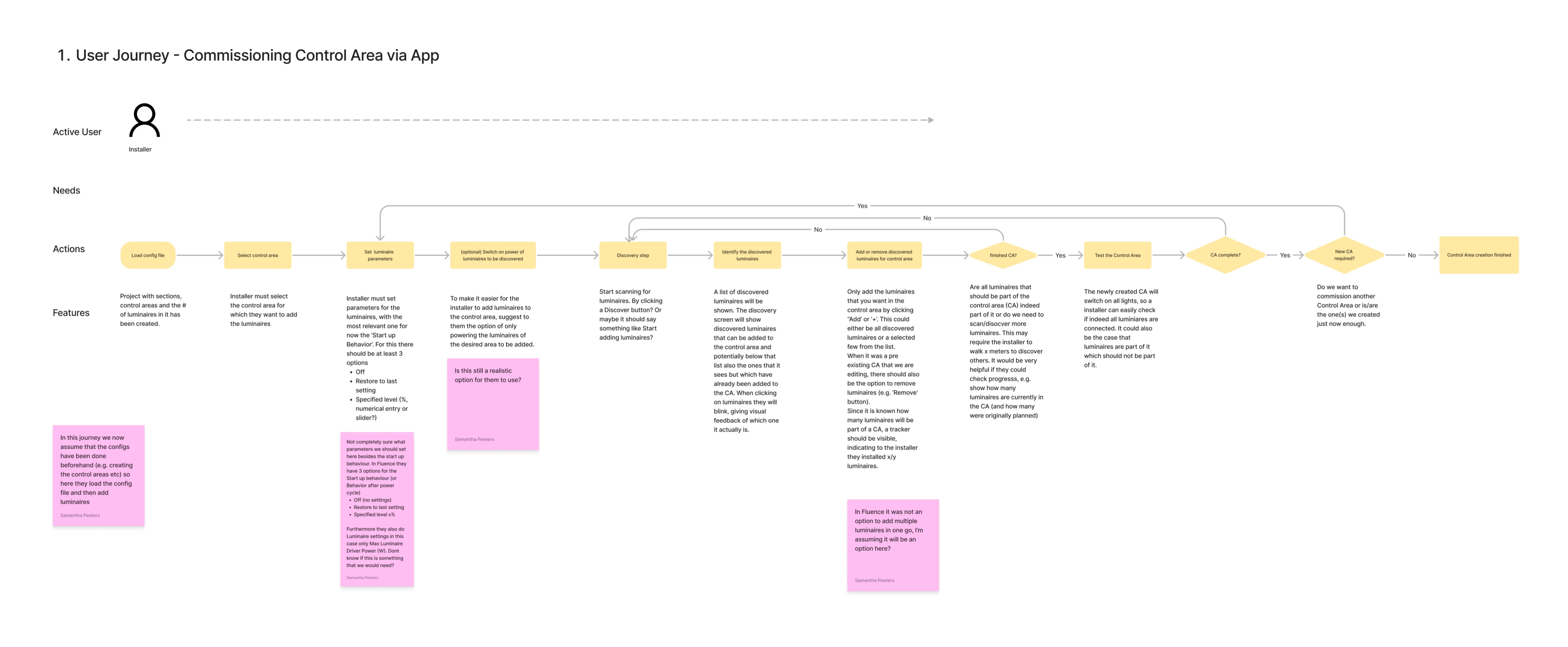
The new user flows focused on efficiency, reducing task-completion steps, and aligning with the Interact Design System.
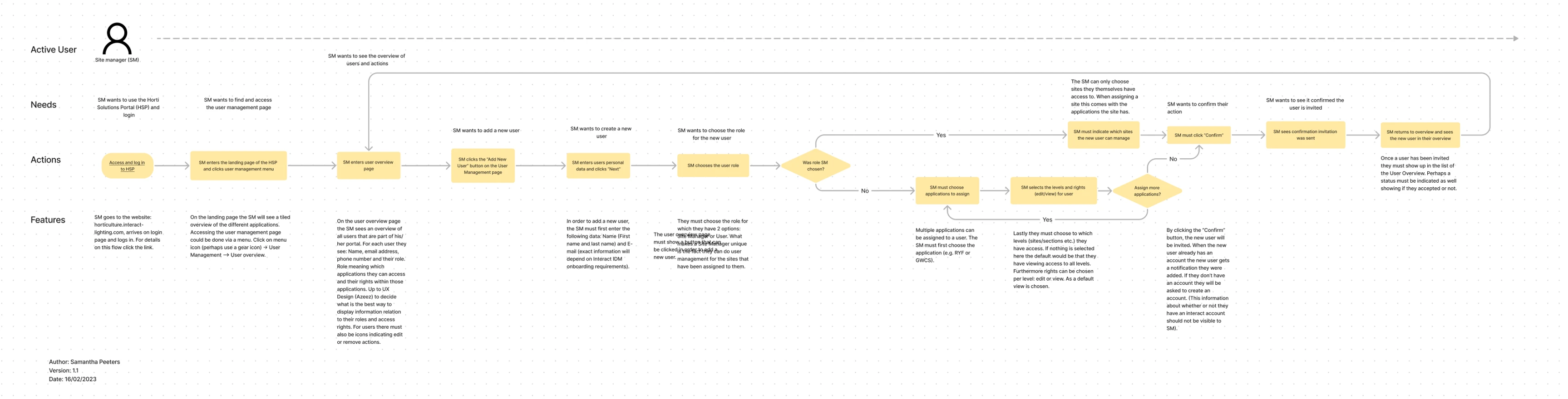
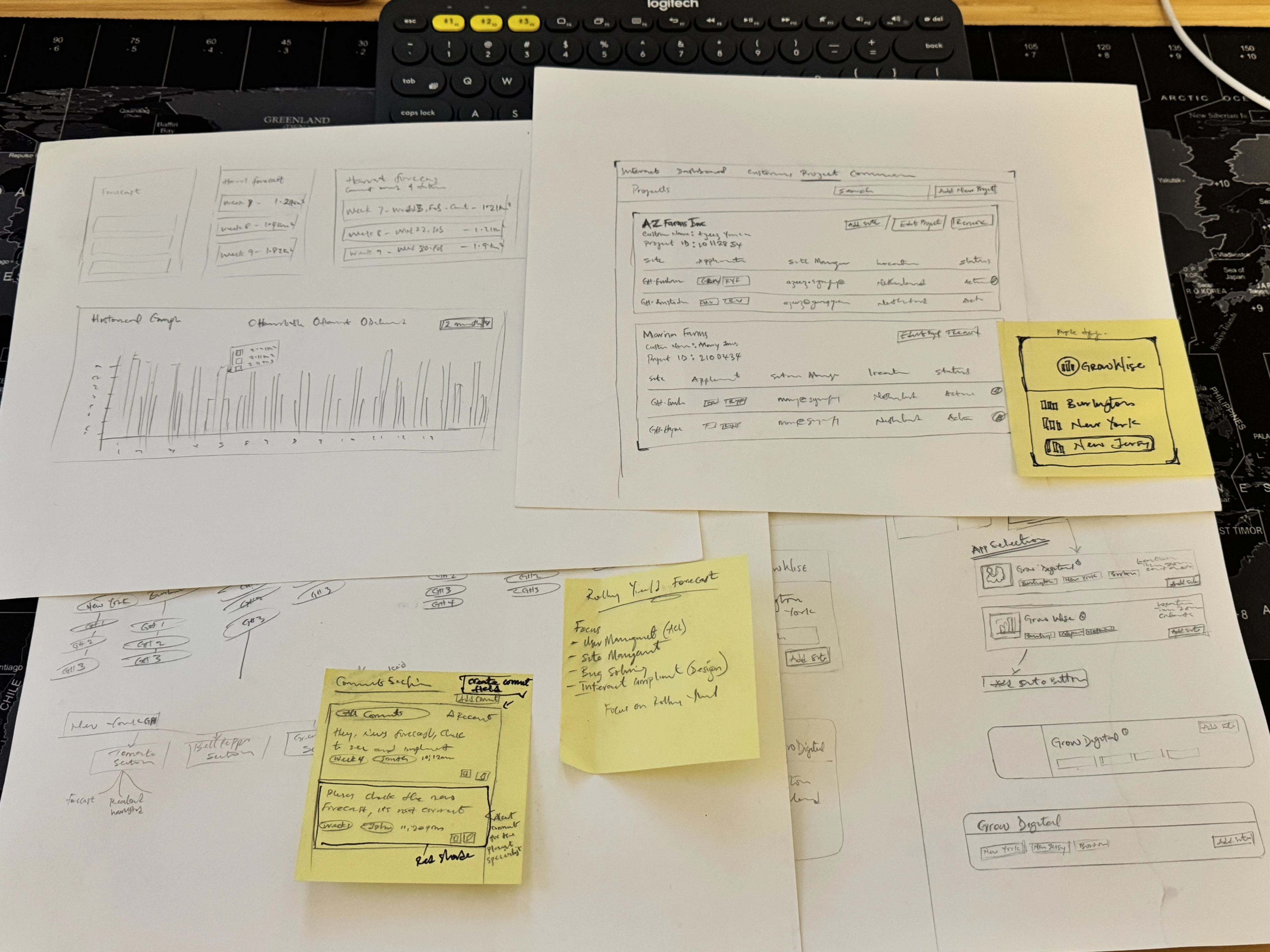
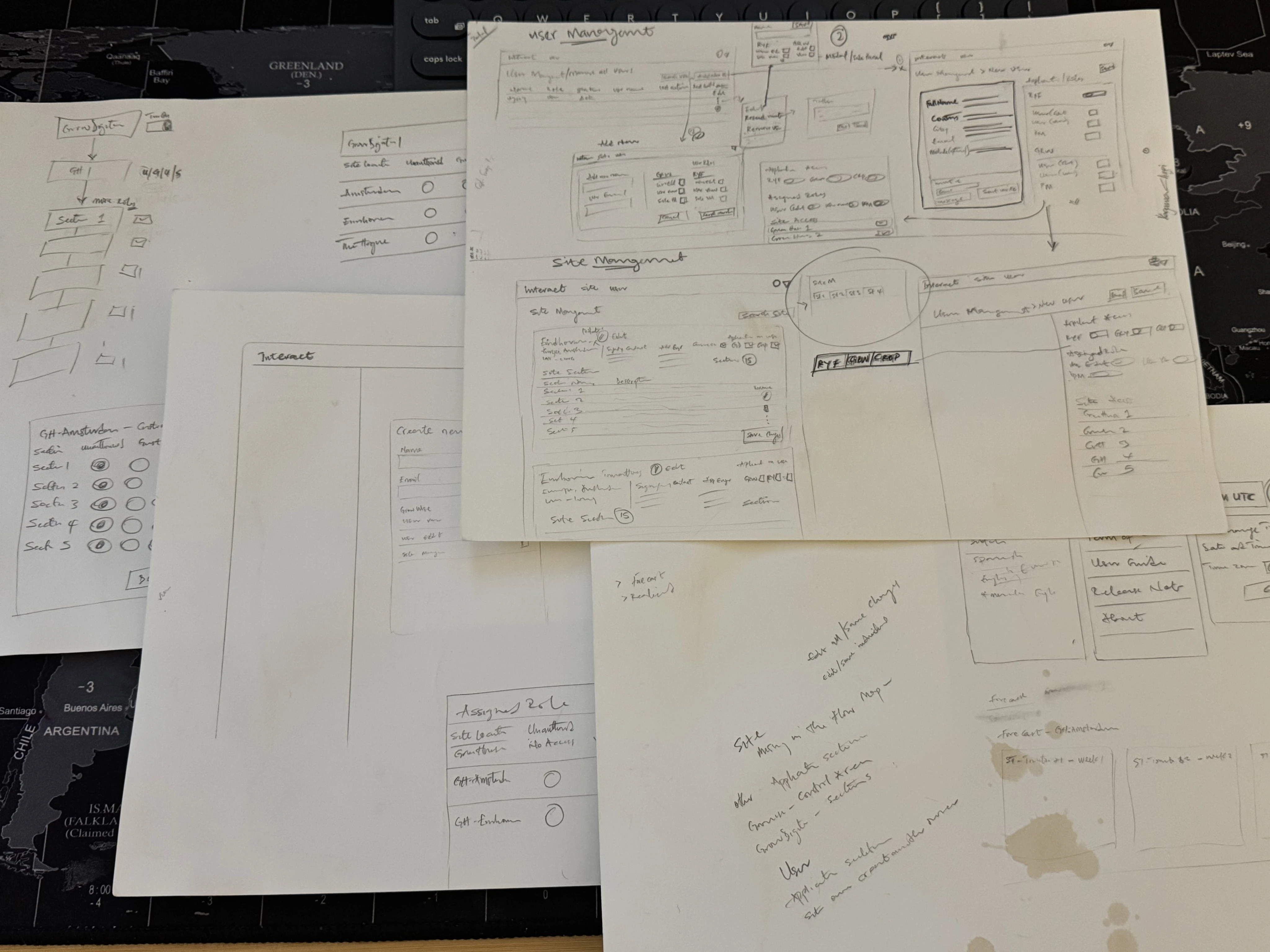
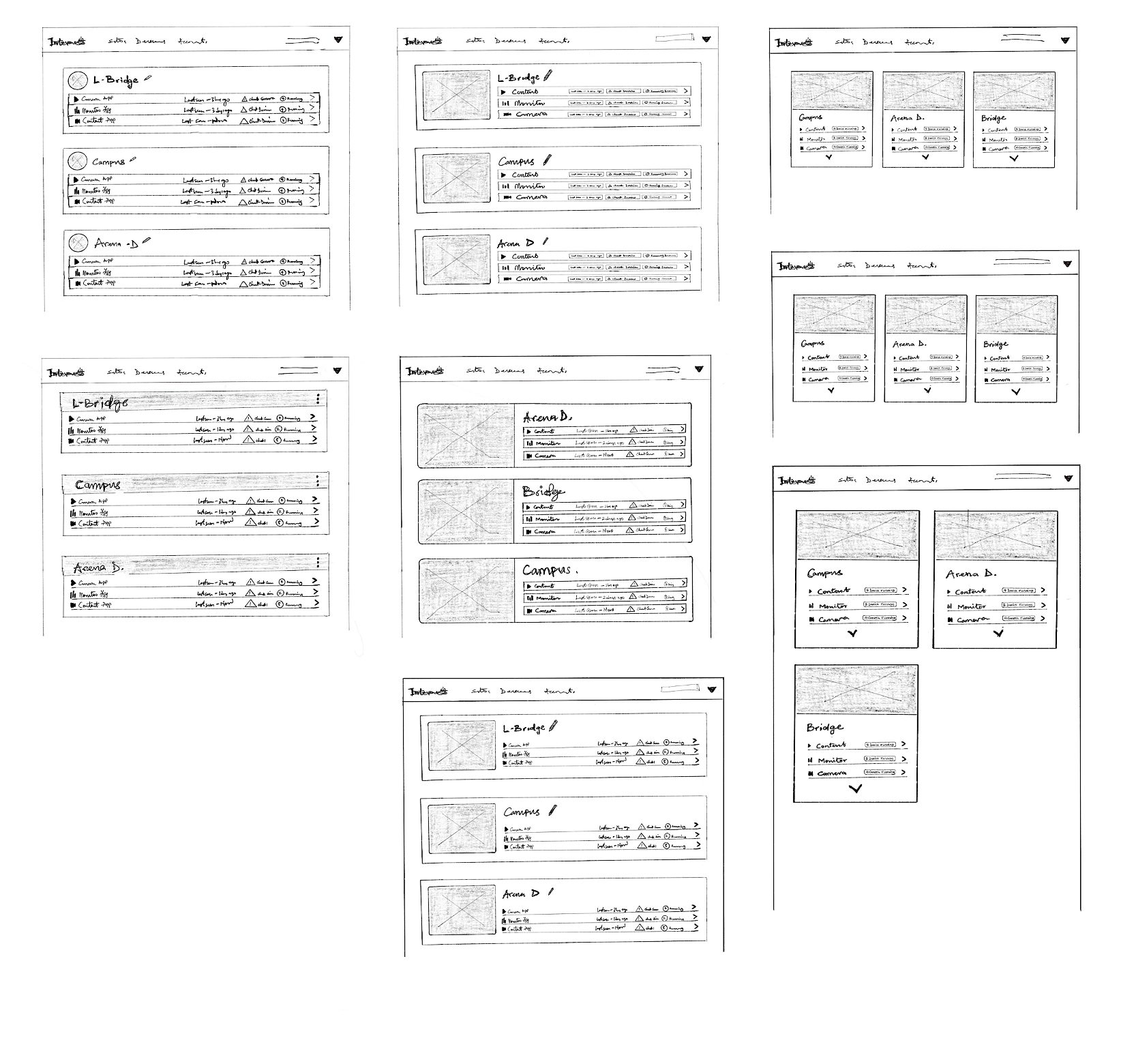
Wireframes & Prototype
I created low-fidelity wireframes to map new user flows, then developed high-fidelity prototypes using the Interact Design System. Clickable prototypes allowed early testing and stakeholder feedback, reducing misunderstandings and improving design accuracy.
Design Thinking & Collaboration
Cross-functional teamwork: I worked closely with developers, product managers, and stakeholders to align on design direction.
Iterative testing: Moderated and unmoderated usability tests refined the designs using real feedback.
Agile methodologies: Rapid prototyping supported continuous feedback loops.
Sketches of some of the screens
The Impact
The redesign of the GrowWise & GrowDigital applications led to significant improvements:
- 50% faster project delivery through interactive prototypes and agile methodologies.
- 70% increase in operational efficiency with faster task completion on the unified platform.
- A new mobile app improved field commissioning and maintenance.
- Enhanced user satisfaction and a 70% boost in engagement.
- A streamlined single-login experience and full alignment with Signify’s global Interact Design System.
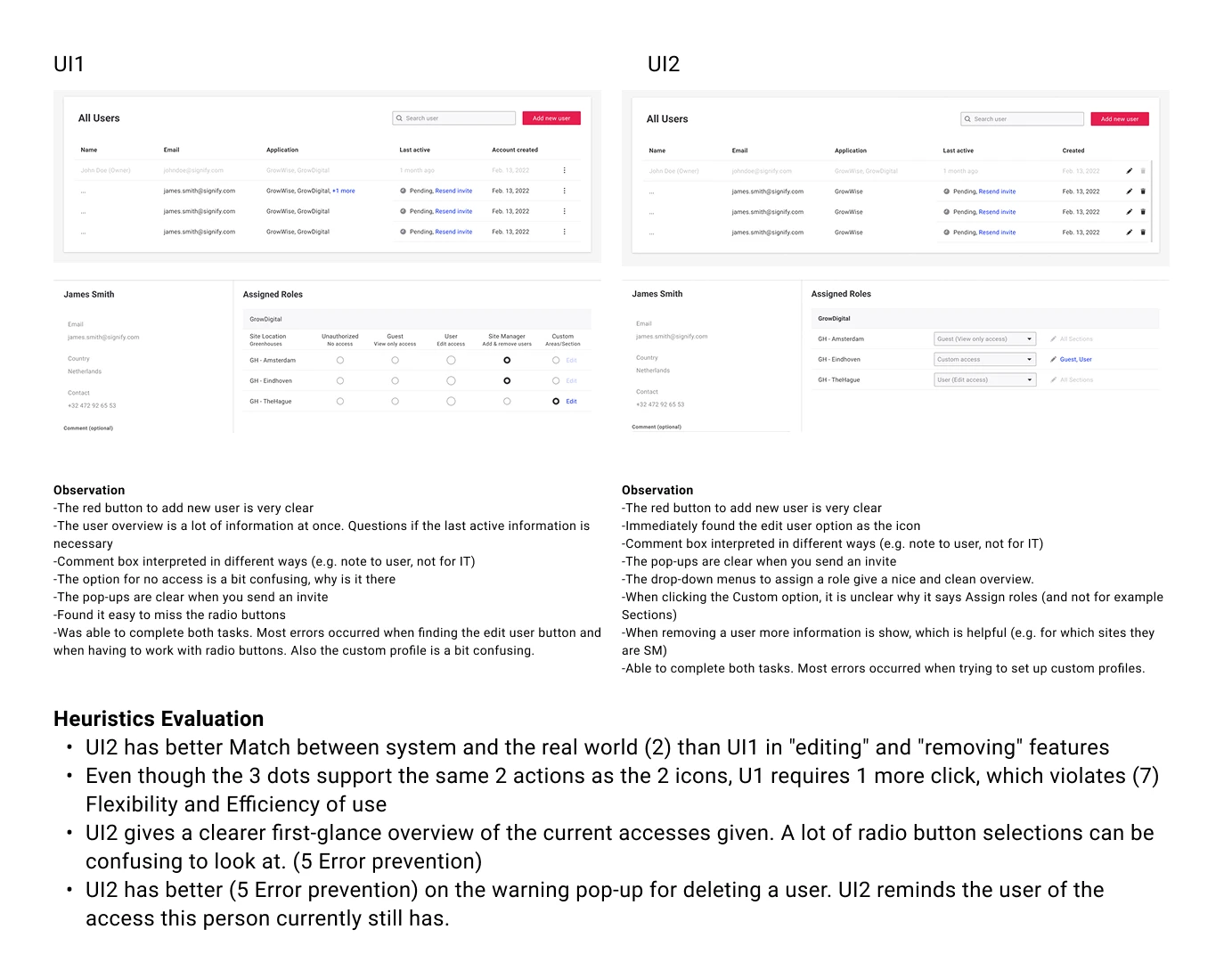
Created multiple design variations and interactive prototypes.
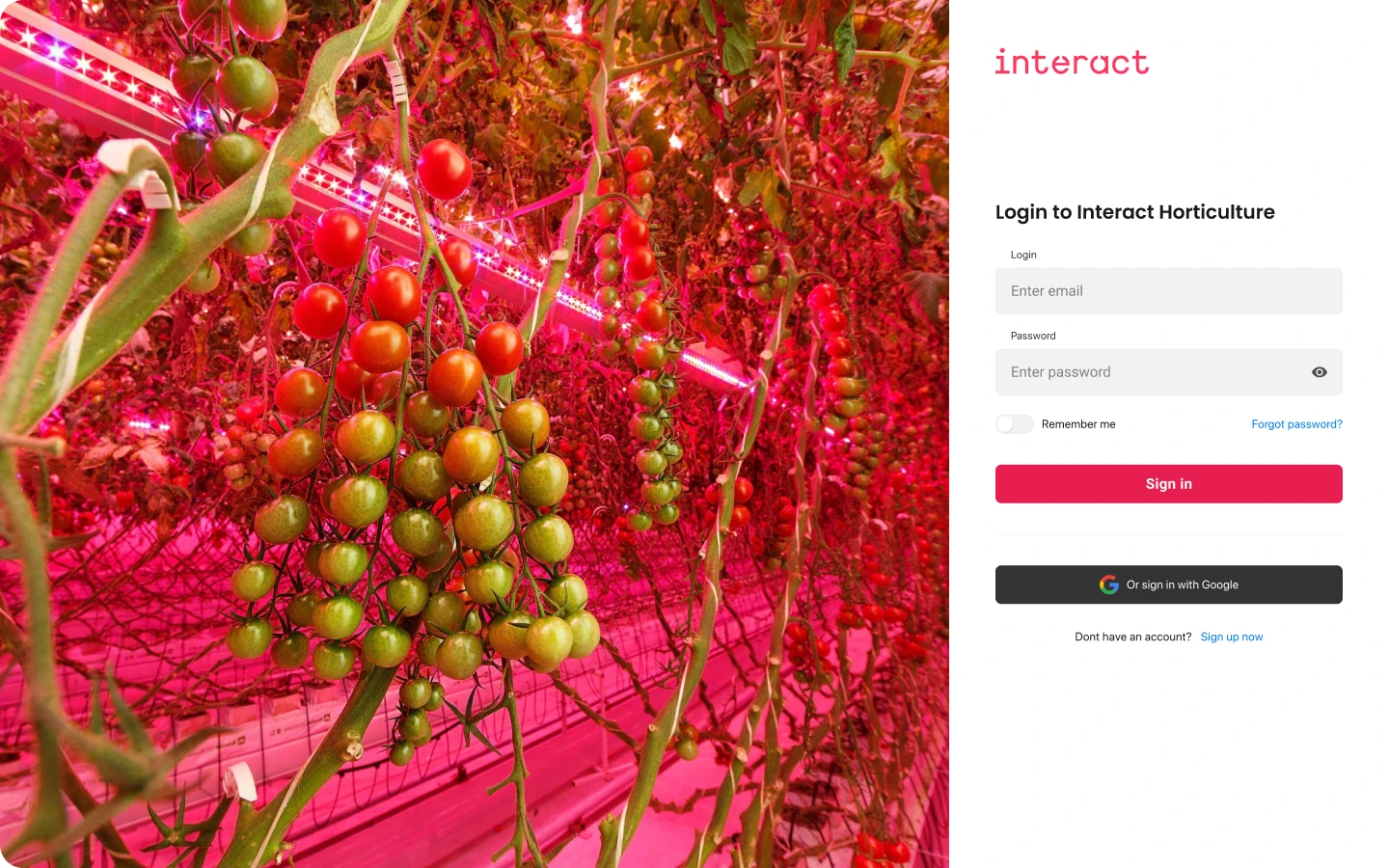
Selected desktop screens
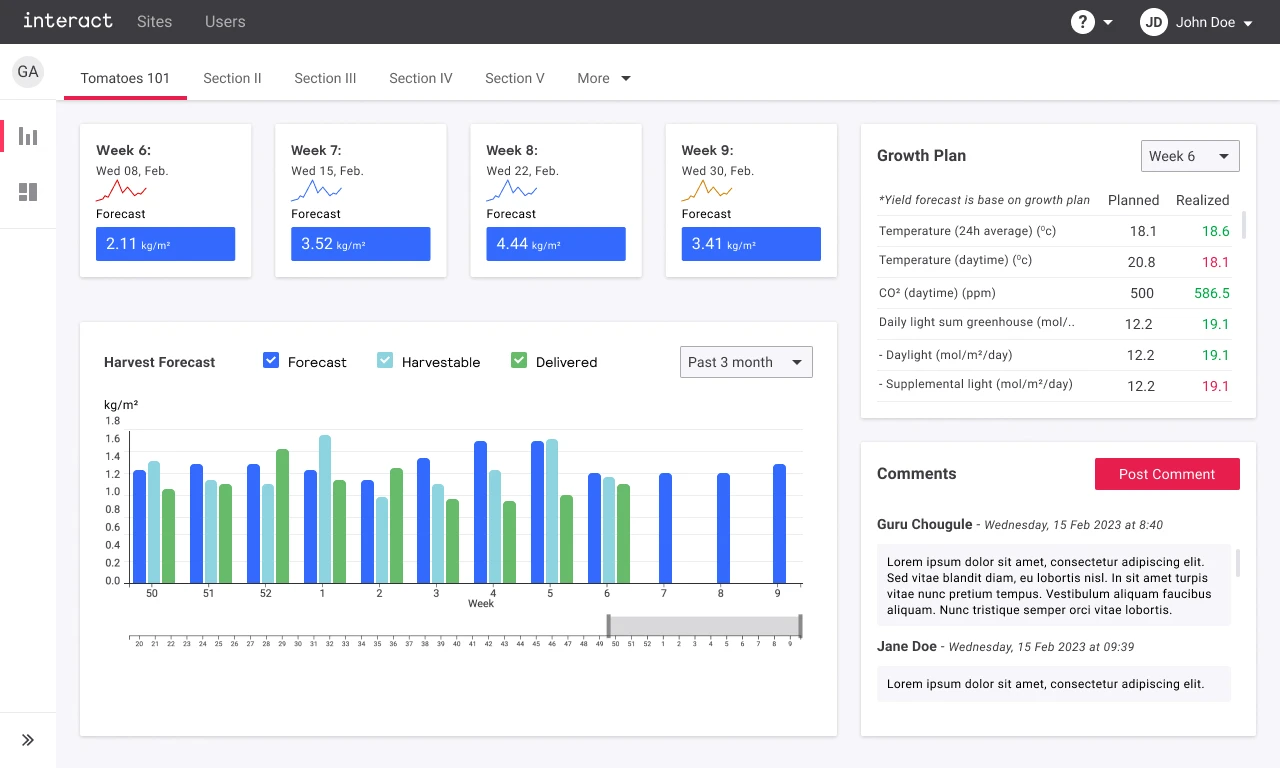


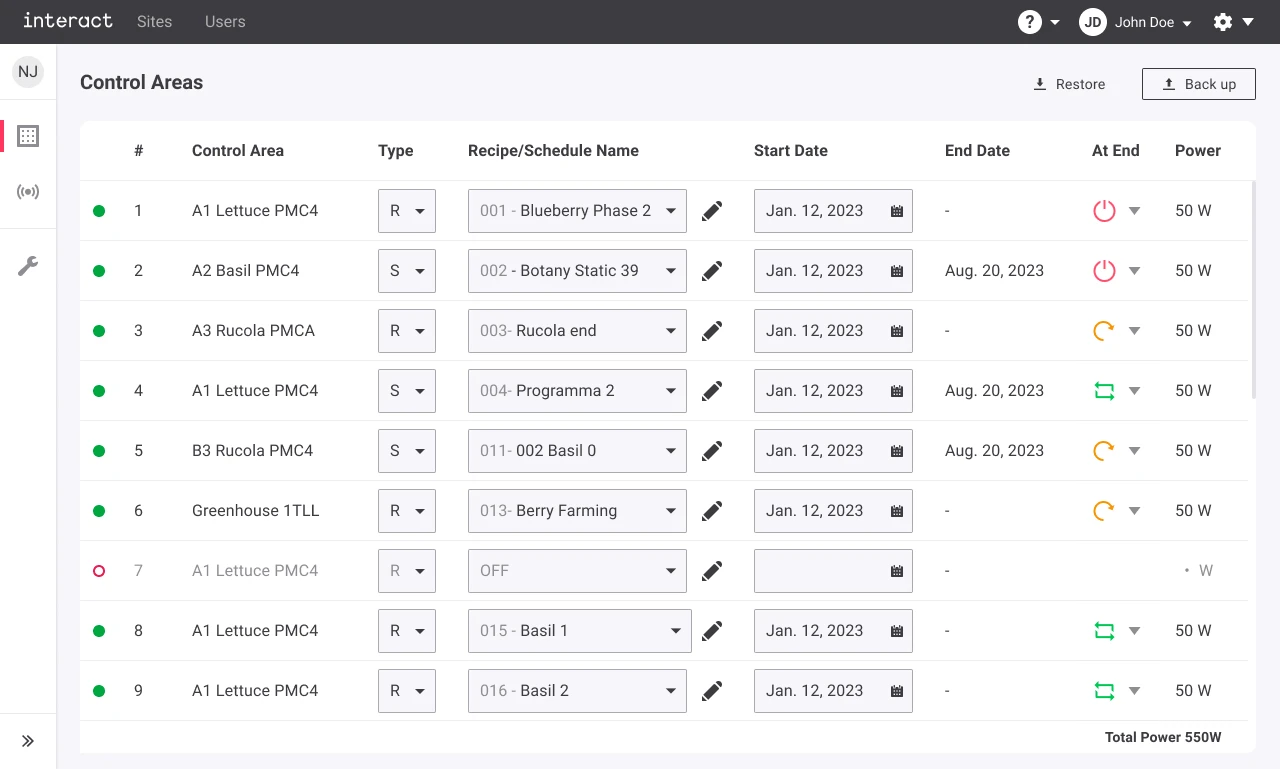
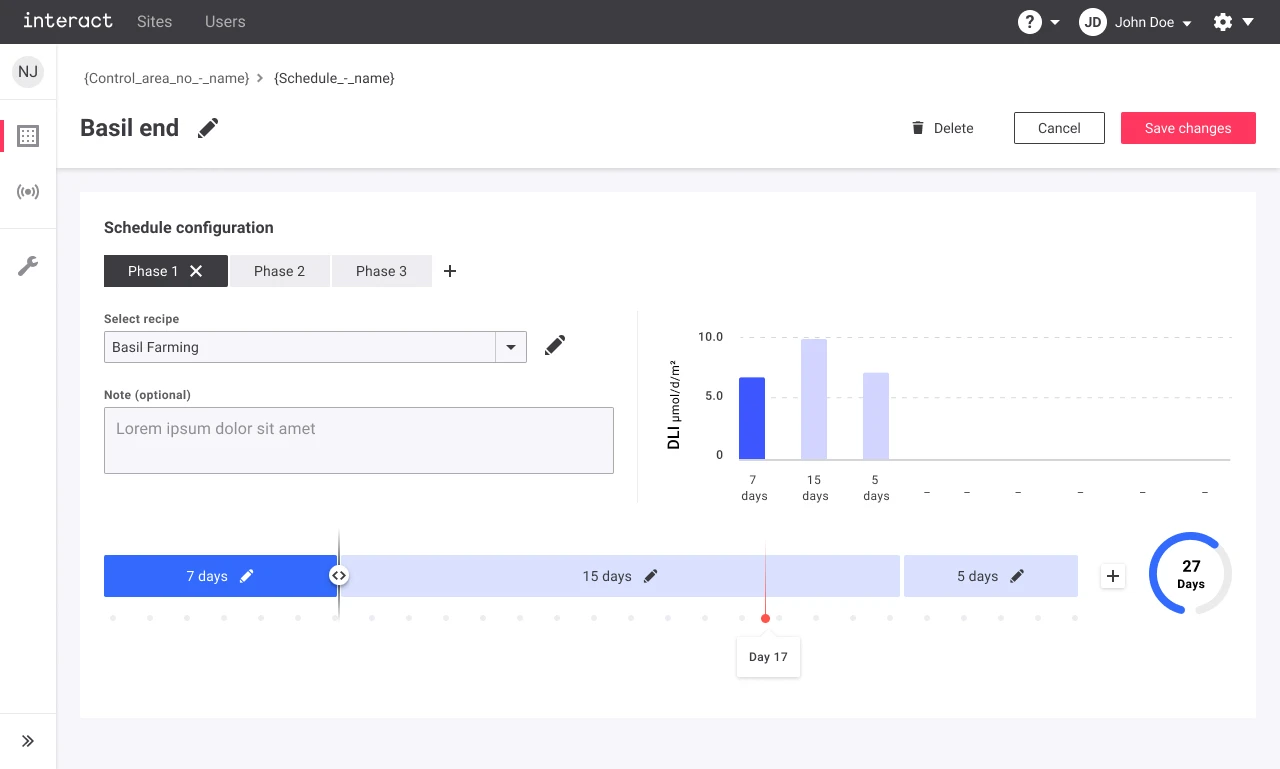
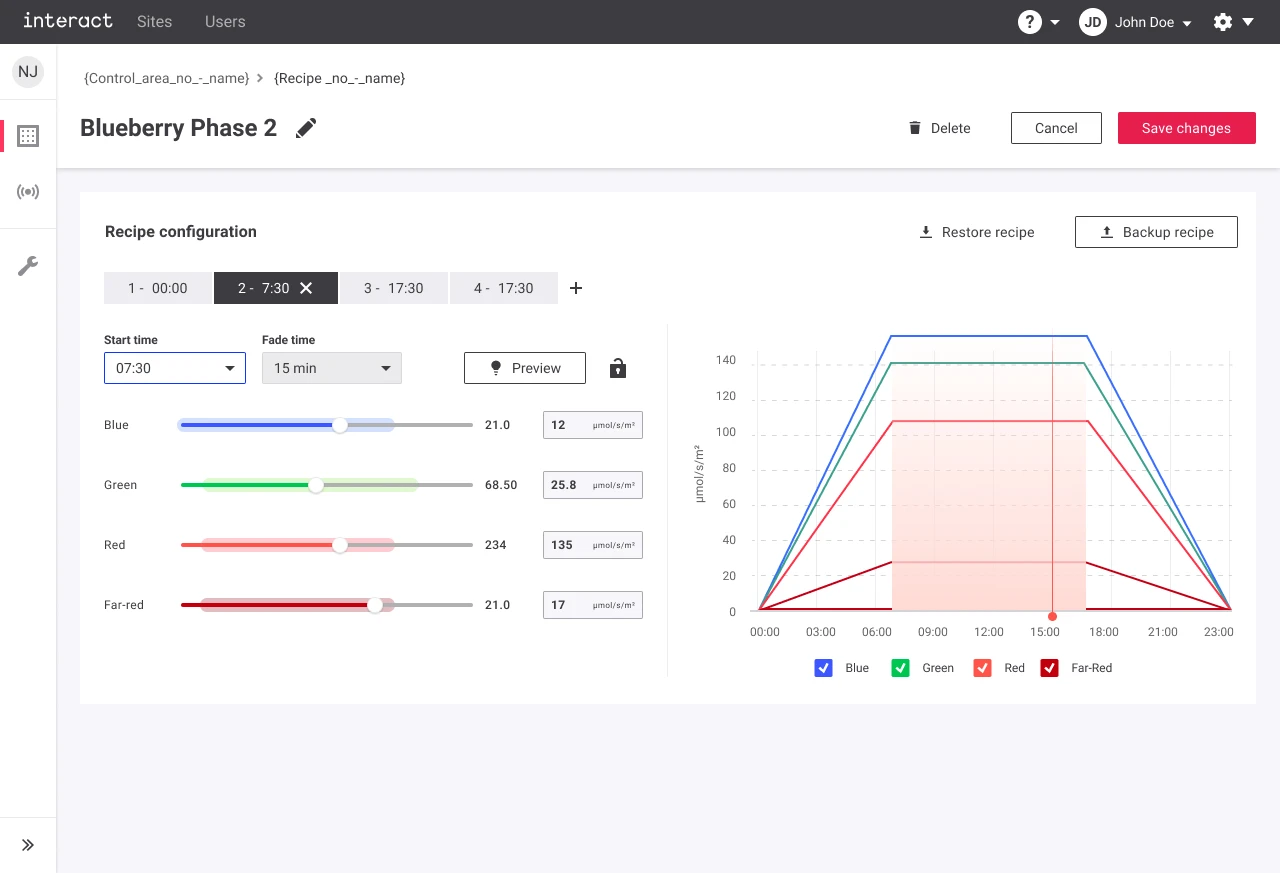
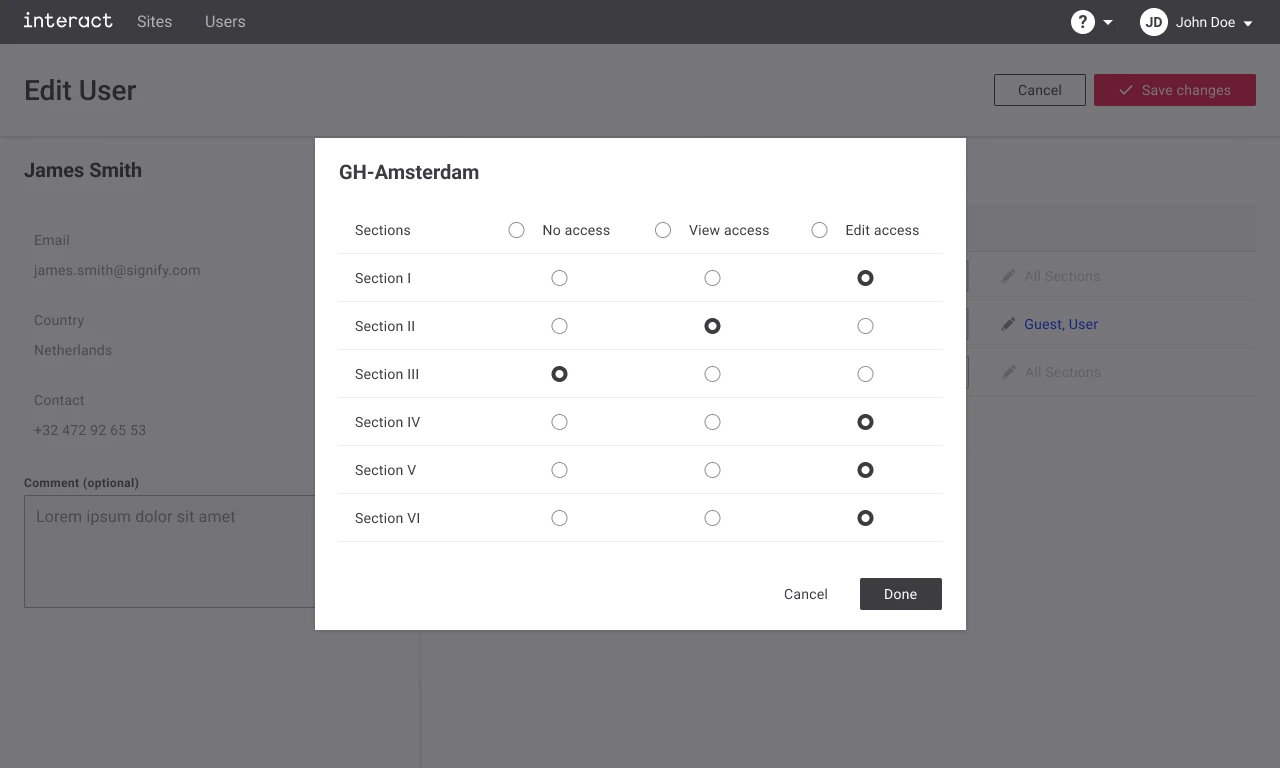
The displayed mockups represent select screens from the GrowWise & GrowDigital redesign. Due to the internal nature of this project with Signify, not all screens and full user flows are included.
Mobile commissioning experience
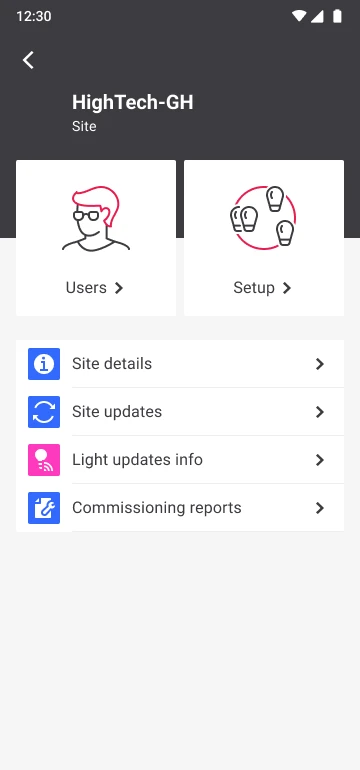


CHALLENGES & Solutions
Every project has its challenges, and this one was no exception. One major hurdle was resistance to change, particularly from application engineers who were comfortable with the old design. I tackled this by hosting workshops where I didn’t just present the new designs but invited feedback in real time. I even included a side-by-side “before and after” demo to show how the new design would make their daily tasks simpler and faster.
Another challenge was technical constraints within the Interact Design System, which governed all Signify applications. To navigate this, I collaborated closely with the global oversight team, ensuring our design updates remained within brand guidelines while still pushing the envelope on usability.
Lessons Learned & Key Takeaways
A crucial takeaway was the power of early-stage prototypes. They not only accelerated development but also acted as a universal language between designers, developers, and stakeholders.
On a personal level, diving into the world of vertical farming and greenhouse operations was both humbling and inspiring. I mean, who knew I’d end up learning the ins and outs of tomato production while redesigning a digital app? I went from sketching wireframes to understanding how the right light can make veggies thrive. It was like mixing tech with a bit of horticulture magic.
It reinforced that as a designer, my role isn’t just to create beautiful interfaces but to truly understand and enhance the environments where those interfaces live. This project didn’t just boost my design chops, it gave me a whole new perspective on how thoughtful design and tech can make a real-world impact, whether it’s helping a greenhouse operator or making sure your next salad is fresh and tasty.